

I'm Who I'm Against
Outrage as identity and the cost to curiosity

I put the phone face down and blink until the counters line up. I want to blame age, but it’s the glow I chose instead of wiping the table. The minutes I just spent don’t add to the day; they hover next to it. What was once a scrapbook of people I love now feels like a store that overheard us in our own kitchen. I don’t feel informed; I feel emptied.
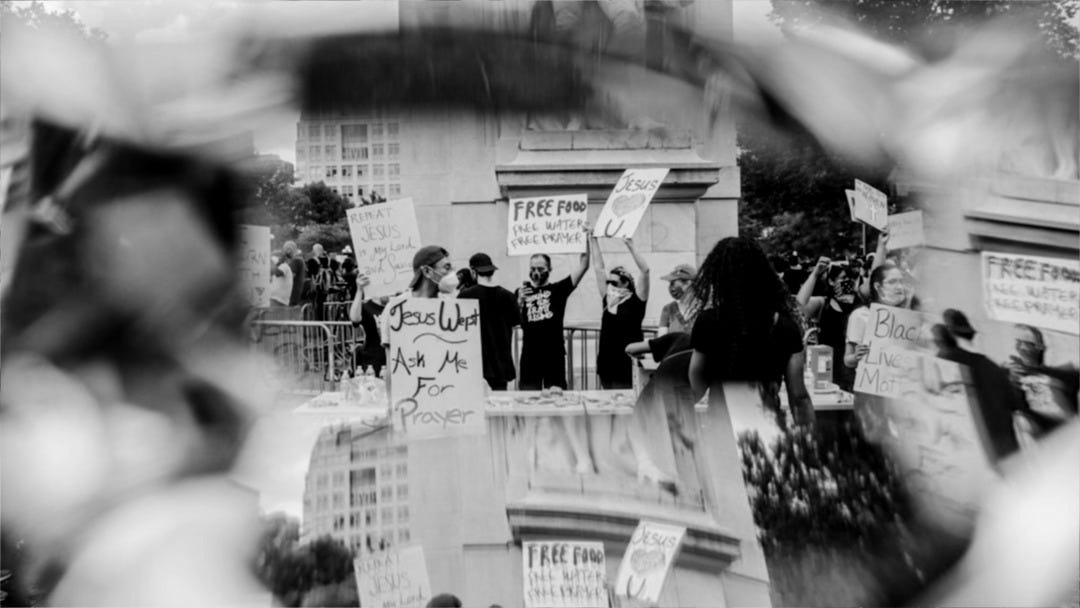
Here’s the part I keep circling: the feed sells itself as a connection and ends up behaving like a performance. When something big happens—politics, policy, a public grief—people rush the stage not to test an idea but to secure a role. The words look like protest, but they function like a costume. You can swap the headline, and what you said still fits. What’s steady isn’t the cause; it’s the need to appear inside an outrage.
That’s where rage turns into identity. You don’t say, “Here’s what I believe.” You say, “Here’s who I’m against.” It’s clean, fast, and self-confirming. You get a feeling of shape: I am this because I am not that. The algorithm rewards volume; the world needs weight, but weight is slower. Slowness doesn’t travel.
I’ve felt the pull. I’ve been there before, I’ve done it. The tight little relief that comes from drafting a harsh line in my head and imagining the applause. It isn’t about persuading anyone. It’s about proof of life—see, I’m here, I’m awake, I’m not one of them. And because the screen is a safe room—no physical risk, minimal consequence—the emotion doesn’t have to mean anything. It never meets the person it claims to argue with. It never makes contact with a body or a doorbell or a long conversation that gets awkward and then productive. It just loops. Anger as a generator humming in the corner.
Meanwhile, the costs are ordinary and heavy. Relationships thin out into categories. You start narrating people instead of knowing them. Most of all, curiosity starves.
I feel it first in small choices. Instead of asking my wife how her day actually went, I predict it and respond to my prediction. I answer a headline in my head and call it listening. The neighbor with the yard sign becomes a shortcut I recognize from the feed, not the person who drags his trash cans out early because he works nights. Curiosity would require a second question. The second question takes time.
Curiosity isn’t heroic. It’s the quiet habit of leaving room for an answer you didn’t already script. It sounds like: what did you mean by that; what happened before this; what did it cost you. It’s slower than outrage and less glamorous. It risks being changed by the reply. That risk feels expensive.
When curiosity thins out, certainty moves in. I get efficient at being right and worse at being surprised. I reach for the line that proves I’m on the correct side and skip the part where I could learn anything.
The saddest part, to me, is how people turn into the sort of friend they would never invite over. Imagine dinner with a person who can only monologue, who treats nuance like treason, who keeps one eye on the mirror to make sure they look sufficiently incensed. That person now lives in our pockets with the volume turned up. We call it discourse, but it’s really maintenance—keeping the mask bright. The cause is the mask; the grievance is the face.
I’m who I’m against.
I don’t think the answer is silence. I think it’s consequence. Say only what you could say to a neighbor on the sidewalk without trying to win. Trade one display a week for one repair:
a call you’ve been avoiding
an unglamorous hour of help
a small donation that doesn’t announce itself
If the point is belonging, belong to something that can look back at you. If the point is care, spend it where it’s needed.
And if rage is the only way the tribe will keep you, it isn’t a community; it’s a generator. Turn it off and see who stays.
I’m trying to practice this at home, in low-stakes ways that still count. Pick up the plates. Listen to my wife without drafting a post in my head. When the news tilts the room, ask what hurts before I ask who’s wrong. Make a short list of things I’m for, not just the list of things I’m against. It sounds quaint until you notice how hard it is.
There’s a line I want to keep close as a guardrail: I’m not who I am; I’m who I’m against. That’s the trap. It feels like conviction and ends up as costume. If I build a self from opposition, every headline becomes a mirror, and the mirror always gives me the same answer. Outrage will happily rent the space where a person should be.
The kitchen comes back into view. The dog needs out. The counters need wiping. None of it will travel far, and maybe that’s the point. The feed can keep its performance. I’m looking for the kind of proof that leaves a mark off-screen—a room a little cleaner, a person a little less alone, a day that adds back in.
I am who I am, and I will become who I wish to become.
Defining yourself by your desired goals and growth, by the quiet and intentional actions, is way more genuine than defining yourself by who you see as your enemy.